Training and certification / FDC
IARCOR Program
IARCOR FDC
Fundamentals of Corrosion
Build a foundation in electrochemistry, corrosion mechanisms, and prevention and evaluation methods.
About the program
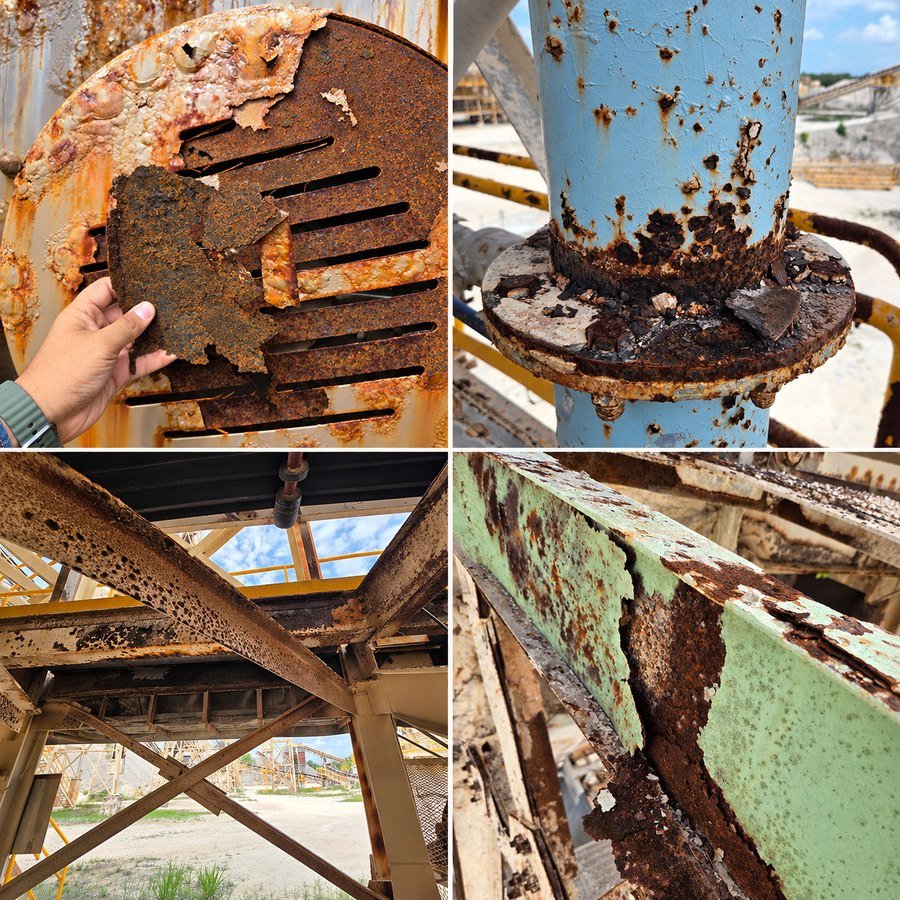
Understand the principles that explain metal degradation and the factors that influence its behavior. FDC introduces conceptual tools for interpreting corrosive phenomena and provides further specialized training in asset protection and integrity.
Who is it aimed at?
Engineers, integrity and cathodic protection technicians, operations supervisors, inspectors and professionals interested in expanding their corrosion fundamentals.
Competencies and approach
Recognize mechanisms, interpret diagrams and curves in an introductory way, identify environmental and operational factors, and understand basic control and evaluation methods.
Program Content
- Electrochemical cells and types of corrosion.
- Laws and fundamentals of thermodynamics and kinetics.
- Pourbaix diagrams, galvanic series and polarization.
- Reference electrodes, passivity and corrosion rates.
- Selection of materials, inhibitors, coatings and cathodic protection.
- Evaluation using gravimetric and electrochemical methods.
Admission requirements
Prior knowledge of materials, chemistry, and basic electrochemistry is recommended. See admission requirements.
Evaluation and approval
The program includes a theoretical assessment. Consult the approval criteria and participation requirements for the call for applications.
Certification
IARCOR FDC; valid for 4 years. This program is part of the TECORR pathway, but completing the FDC alone does not guarantee that certification.
Frequently Asked Questions about Corrosion Fundamentals
A basis for understanding the mechanisms of deterioration and the principles of corrosion prevention and control.
What topics does Corrosion Fundamentals include?
Electrochemistry, corrosion cells, Pourbaix diagrams, galvanic series, polarization, passivity and corrosion rate, along with protection principles.
What prior knowledge is useful?
Knowledge of materials, chemistry, and electrochemistry is helpful. Check the admission requirements and career guidance available.
How does it differ from CORRI Level 1?
FDC provides general fundamentals of corrosion and its control methods. CORRI Level 1 specializes in internal corrosion of production, storage, and transportation systems.
Does this course alone grant the TECORR route?
No. FDC is part of the published training pathway, but completing a program does not equate to fulfilling all the pathway requirements. Consult IARCOR for the relevant steps and conditions.